DeKalb County Building Permits: What Tucker Homeowners Must Know After Water Damage
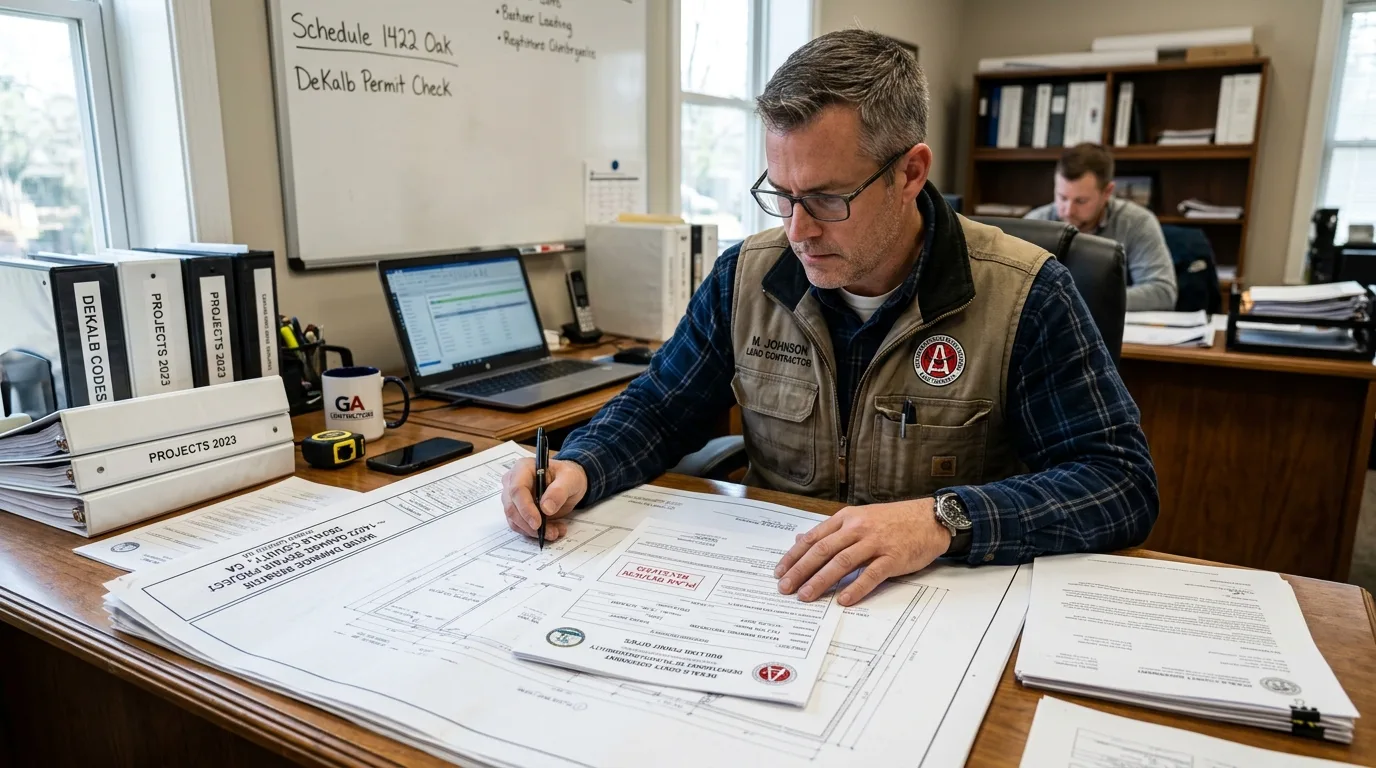
Most Tucker homeowners don’t think about building permits until a contractor brings them up — and in the middle of a water damage restoration project, the permit conversation can feel like an obstacle. But DeKalb County building permits serve a real function in restoration work: they ensure that reconstruction after water damage meets current safety standards, creates a legal record of the work, and protects the homeowner’s insurance coverage and property resale value. This post explains exactly what requires a permit in Tucker for water damage restoration, how the DeKalb County permit system works, and what changed on January 1, 2026 when DeKalb adopted new building codes.
Water Damage Restoration in Tucker — We Handle Permits
Tucker Water Damage Restoration coordinates DeKalb County permits for all reconstruction work. Call (877) 698-1311 for a free assessment.
How DeKalb County Permits Work for Water Damage Restoration
The DeKalb County Permits, Plan Review & Inspections Division handles all residential and commercial building permits for Tucker properties. The permit office is located at 178 Sams Street, Decatur, GA, with permit applications filed online through the e-Permitting Portal at epermits.dekalbcountyga.gov.
DeKalb County adopted the 2024 International Code Council (ICC) codes effective January 1, 2026 — including the International Building Code, International Residential Code, International Plumbing Code, International Mechanical Code, and NFPA 70 National Electrical Code. All reconstruction work beginning after January 1, 2026 must comply with these updated standards.
Water damage restoration divides into two phases with different permit requirements:
Mitigation phase (typically no permit required): Water extraction, structural drying, antimicrobial treatment, and demolition of damaged materials (removing wet drywall, carpet, flooring) generally do not require permits. This is the immediate response phase that any qualified restoration firm can begin immediately.
Reconstruction phase (permits required for most work): Replacing drywall, flooring, and structural elements requires permits when the work involves trade systems. Specifically:
- Electrical work: any replacement or modification of wiring, outlets, panels, or fixtures
- Plumbing work: any replacement or modification of water supply or drain lines
- Mechanical work: any HVAC system repair or replacement
- Structural repair: any work involving load-bearing walls, joists, or roof framing
Types of Permits for Tucker Water Damage Reconstruction
Building permit: Required for structural repairs, wall framing replacement, and significant interior reconstruction. Filed by the contractor or homeowner through the e-Permitting Portal.
Electrical permit: Required for any electrical work. Must be filed by a licensed electrical contractor in Georgia, or by the homeowner for certain limited homeowner-performed work. All electrical work under DeKalb’s 2024 NFPA 70 adoption requires inspection.
Plumbing permit: Required for any water supply or drain line work. Must be filed by a licensed plumber or homeowner (with restrictions). Relevant after water damage events that damaged plumbing — burst pipe repair or sewage line work.
Mechanical permit: Required for HVAC work. Relevant after water damage to air handlers, ductwork, or condensate systems.
What Happens If You Skip Permits in Tucker
Skipping permits for reconstruction work in Tucker creates several categories of risk:
Insurance claim complications: Insurers can deny or reduce claims for work that was not properly permitted and inspected. If an adjuster discovers unpermitted reconstruction, it creates grounds for disputing coverage on the current claim and potentially voiding coverage on future related claims.
Property resale problems: Unpermitted work appears in DeKalb County permit records — or more accurately, doesn’t appear when it should. Real estate transactions in Tucker regularly involve permit searches. Unpermitted reconstruction after water damage can delay closings, reduce sale prices, or require remediation before closing.
Code compliance liability: If unpermitted work causes a subsequent problem — a fire from improperly installed wiring, a plumbing failure from an uninspected repair — the homeowner bears full liability without the protection that permitted, inspected work provides.
Any contractor who proposes skipping permits to save time or money is not acting in your interest. Legitimate contractors in Tucker coordinate permits as a standard part of reconstruction service.
Tucker Water Damage Restoration — Fully Permitted Work
We file all required DeKalb County permits and coordinate inspections as part of our full restoration service. Call (877) 698-1311.
What the 2024 ICC Code Adoption Means for Tucker Homeowners
DeKalb County’s January 1, 2026 adoption of the 2024 ICC codes updated several requirements that directly affect water damage reconstruction:
Electrical updates: The 2024 NFPA 70 includes expanded GFCI and AFCI protection requirements. Reconstruction of kitchens, bathrooms, laundry areas, basements, and crawl spaces after water damage now requires installing GFCI and AFCI protection in locations where it may not have been required under previous codes.
Energy efficiency: The 2024 IECC (International Energy Conservation Code) tightens air sealing and insulation requirements for reconstruction. Insulation replaced after water damage must meet current R-value requirements rather than matching the original specification.
Plumbing: The 2024 IPC updates water heater installation requirements, drain pipe slope specifications, and fixture standards. Plumbing replaced after water damage must meet current specifications.
Practical impact: Many Tucker homes, particularly older properties in Smoke Rise and Idlewood Acres built under 1980s and 1990s codes, will have reconstruction work that improves on the original construction rather than merely restoring it. This is actually beneficial for homeowners — post-damage reconstruction often produces safer and more energy-efficient spaces than existed before the loss event.
Practical Uses: Common Tucker Permit Scenarios
Scenario 1 — Burst pipe in bathroom wall: Plumbing repair requires a plumbing permit. Drywall replacement typically requires a building permit if structural framing is exposed. Electrical outlets near the damaged area may require GFCI upgrades under current code.
Scenario 2 — Basement flood with electrical damage: Water damaged the panel and subpanel. Full electrical permit required. Structural drywall replacement requires building permit. GFCI and AFCI protection upgraded throughout the basement per 2024 NEC.
Scenario 3 — Roof leak saturating attic and ceiling: Building permit for framing repair. Insulation replacement to current R-value per 2024 IECC. Electrical permit if ceiling fixtures were damaged.
Scenario 4 — HVAC condensate overflow saturating ceiling: Mechanical permit for HVAC repair. Building permit for drywall replacement. Potential electrical permit depending on extent of damage.
Frequently Asked Questions
How long do DeKalb County permits take for Tucker water damage projects?
Simple permits filed through the e-Permitting Portal for straightforward residential work typically process in 1 to 5 business days. Complex projects involving structural work may require plan review, which can take 10 to 15 business days. We submit permit applications early in the project to minimize delays in the reconstruction timeline.
Can a homeowner pull their own permits in Tucker?
Yes — Georgia law allows homeowners to obtain permits for work on their primary residence in many categories. However, licensed trade contractors (electricians, plumbers, HVAC contractors) must obtain their own licenses’ associated permits for trade work even when a homeowner is involved. We advise on the specific requirements for each project.
Does mitigation work require permits in Tucker?
Emergency mitigation — water extraction, drying, and demolition of damaged materials — generally does not require permits. The permit threshold begins with reconstruction. However, we document all mitigation work thoroughly because the scope of demolition affects what permits are needed for reconstruction.
DeKalb County Permit Guidance for Tucker Homeowners
Tucker Water Damage Restoration handles all permit coordination for restoration projects. Call (877) 698-1311 for a free consultation.
Related: