Sewage Backup Cleanup in Tucker, GA: Health Risks & Response
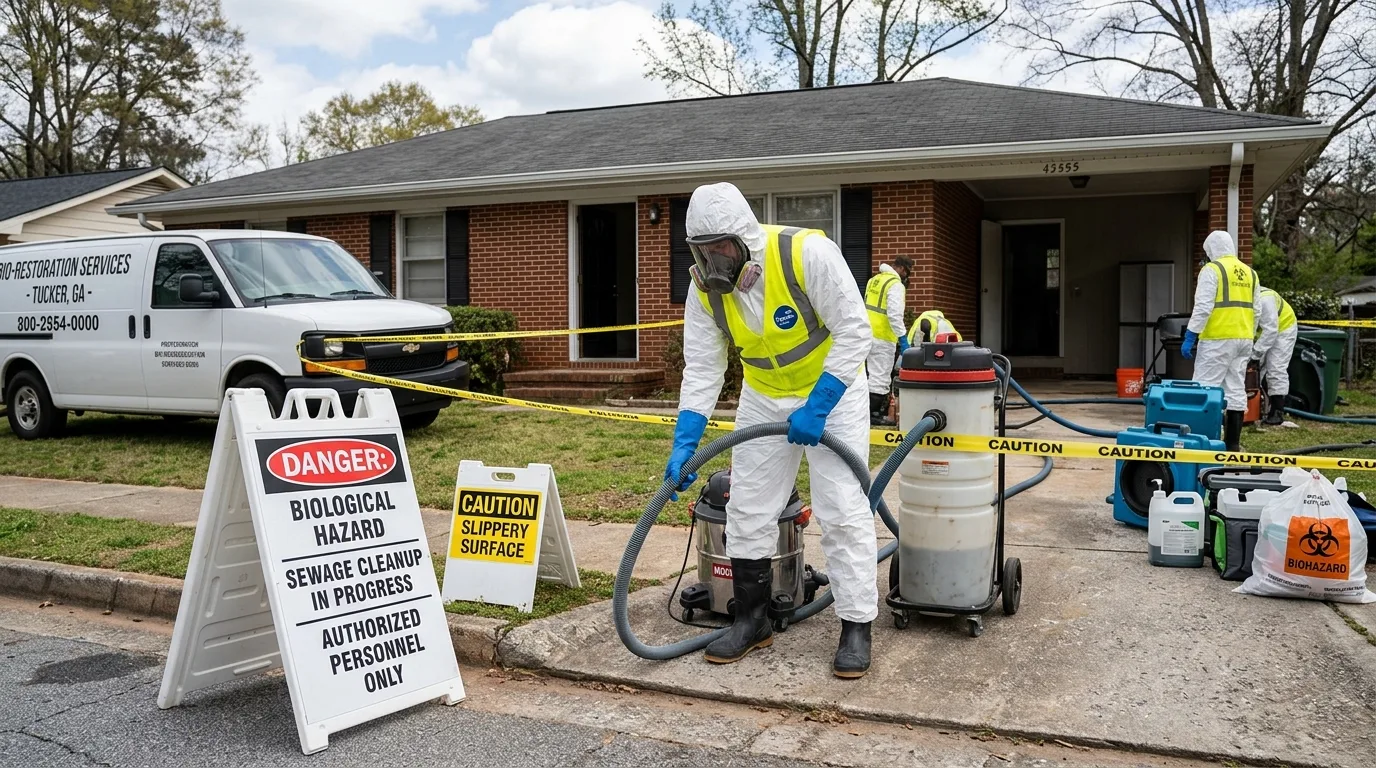
Of all the water damage scenarios Tucker, GA homeowners face, sewage backup is the one that demands the most immediate and least DIY-friendly response. Sewage — classified as Category 3 or “black water” by IICRC standards — contains a complex mix of bacteria, viruses, parasites, and chemical contaminants that pose genuine health risks to anyone exposed without proper protective equipment. In Tucker’s humid subtropical climate, those pathogens thrive rapidly in warm conditions, making the window for safe self-assessment effectively zero. This post explains the actual health risks of sewage exposure, what Tucker homeowners should and should not do when a backup occurs, and what professional remediation involves.
Sewage Backup in Tucker? Call Immediately — It's a Biohazard
Call (877) 698-1311 right now for emergency sewage cleanup throughout Tucker and DeKalb County. Do not attempt cleanup yourself.
What Makes Sewage Backup a Health Emergency in Tucker
Sewage backup cleanup in Tucker, GA is classified as a biohazard response because sewage contains pathogens at concentrations that can cause serious illness from even brief exposure. The specific health risks depend on the source of the sewage, but any backup from a main sewer line or drain system should be treated as containing all categories of biological and chemical hazards:
Bacterial pathogens: E. coli, Salmonella, Shigella, and Campylobacter are all common in sewage. These bacteria cause gastrointestinal illness that ranges from unpleasant to life-threatening depending on the exposed individual’s immune status, exposure level, and whether contaminated water is ingested.
Viral pathogens: Hepatitis A, norovirus, and rotavirus survive in sewage and on contaminated surfaces for days to weeks in Tucker’s warm climate. These viruses are highly infectious at very low exposure levels and do not require direct contact with sewage — touching a contaminated surface and then touching the face is sufficient for transmission.
Parasites: Giardia and Cryptosporidium cysts are present in municipal sewage and are resistant to standard disinfection. Crypto in particular is highly resistant to bleach-based cleaning products.
Chemical contaminants: Sewage from municipal systems contains pharmaceutical residues, household chemicals, industrial discharges, and heavy metals that have been disposed of through drains and toilets throughout the collection system.
Mold: Tucker’s humid climate means that sewage-contaminated porous materials develop active mold growth within 24 hours — compounding the biohazard with a second category of health risk.
What Tucker Homeowners Should NOT Do After Sewage Backup
Do not touch sewage or contaminated surfaces with bare hands. Even brief skin contact is a risk. Do not touch your face, food, or children after any contact with sewage-contaminated areas.
Do not use household cleaning products. Bleach and standard household disinfectants are not effective against the full spectrum of sewage pathogens and are not safe for use on porous building materials. These products also do not address the structural drying requirements that prevent mold colonization.
Do not run fans or HVAC in the affected area. Fans distribute sewage-contaminated aerosols throughout the home. If the HVAC system intakes are in or near the affected area, shut the system off — running it distributes pathogens to unaffected spaces.
Do not allow children or pets in affected areas. Children crawl on floors and put hands in mouths — the exposure risk for children is dramatically higher than for adults in contaminated environments.
Do not try to dry the space before decontamination is complete. Decontamination must precede drying, not follow it. Attempting to dry a sewage-contaminated space without proper decontamination embeds pathogens into structural materials that remain hazardous even after they appear dry.
What to Do Immediately After Sewage Backup in Tucker
Evacuate the affected area. Remove all people and pets from rooms where sewage has entered. Close doors to contain the contaminated zone and prevent foot traffic from spreading contamination.
Shut off utilities in affected areas. Turn off electrical circuits serving sewage-contaminated areas if you can do so from a panel that is not itself in the contaminated zone. Do not enter electrical equipment areas that have been flooded with sewage.
Call for emergency sewage cleanup immediately. Tucker Water Damage Restoration provides 24/7 emergency response to sewage backup events throughout Tucker and DeKalb County. Do not wait for business hours — sewage events require immediate response. Call (877) 698-1311 now.
Document with photos if it is safe to do so. Photograph the affected areas from the doorway before any cleanup or entry. This documentation supports the insurance claim.
Contact your insurance company. Report the event promptly. Sewage backup coverage requires a water backup rider — if you have one, a claims adjuster will coordinate with your restoration team. If you’re not sure whether you have this rider, your insurance agent can confirm coverage status.
Emergency Sewage Cleanup in Tucker — 24/7 Response
Call (877) 698-1311 immediately. Tucker's humidity accelerates pathogen growth — do not wait.
What Professional Sewage Cleanup Involves in Tucker
Professional sewage cleanup follows a biohazard remediation protocol that is categorically different from standard water damage response:
Full PPE: Technicians arrive in respirators, Tyvek coverall suits, and chemical-resistant gloves. All work is performed with respiratory protection appropriate for the pathogen exposure level.
Containment establishment: Polyethylene sheeting and negative air pressure machines establish contaminated and clean zones. This prevents cross-contamination during the remediation process — sewage-contaminated aerosols are contained within the work area and exhausted through HEPA-filtered units to the exterior.
Sewage removal: Standing sewage is removed using equipment dedicated to Category 3 events — not the same equipment used for clean water events. All removed sewage is disposed of per biohazard waste regulations.
Porous material removal: All porous materials that contacted sewage — carpet, carpet padding, drywall, insulation, and certain flooring materials — are removed regardless of apparent saturation level. These materials cannot be fully decontaminated and must be replaced.
Surface decontamination: Non-porous structural surfaces — concrete floors, treated lumber, metal framing — are cleaned using hospital-grade EPA-registered antimicrobials effective against the pathogen spectrum found in sewage. Multiple treatment passes are standard.
Structural drying: After decontamination is confirmed, structural drying proceeds to prevent mold colonization. Tucker’s humidity makes this step critical — wet structural materials post-remediation develop mold within 24 to 48 hours regardless of decontamination treatment.
Clearance verification: Post-remediation testing confirms that surfaces and air are within acceptable pathogen and mold parameters before the space is cleared for reconstruction and re-occupancy.
Health Risks by Exposure Type
Direct contact (touching sewage with skin): Risk of skin infection and GI illness if hands contact face or food afterward. Wash exposed skin thoroughly with soap and water immediately.
Inhalation (breathing sewage aerosols): Risk of respiratory infection. Symptoms may be delayed by days to weeks. If you were in a sewage-affected area without respiratory protection, monitor for fever, nausea, and respiratory symptoms.
Indirect contact (walking through contaminated areas): Risk of tracking contamination to clean areas. Remove and dispose of footwear worn in contaminated areas. Clean all surfaces in your path.
Extended exposure (living in a home with unmitigated sewage): Significantly elevated risk across all pathogen categories, with increasing mold exposure as contaminated materials begin to colonize. Not a safe condition — evacuate the affected portion of the home until remediation is complete.
Frequently Asked Questions
Is sewage backup covered by homeowners insurance in Tucker?
Sewage backup coverage requires a specific water backup rider on standard homeowners’ insurance policies in Tucker. Without this rider, sewage backup is typically excluded. Review your policy now — this rider is generally inexpensive ($50–$200/year) relative to the typical cost of sewage remediation ($3,000–$15,000). Many DeKalb County homeowners discover they don’t have this rider only after a backup event.
How long does sewage cleanup take in Tucker?
Sewage cleanup in Tucker typically takes 2 to 5 days: extraction and initial decontamination on day 1, continued decontamination and material removal on days 2 and 3, structural drying on days 3 through 5, and clearance testing after drying is confirmed complete. Larger events or those involving crawl spaces may take longer.
Can sewage backup make Tucker homeowners sick even after the water is gone?
Yes — unseen pathogens persist on surfaces and in the air of insufficiently decontaminated spaces. The appearance of cleanliness is not a reliable indicator of decontamination. This is why clearance testing — air sampling and surface swabs — is a required final step in professional sewage remediation, not an optional add-on. Never reoccupy a sewage-affected space before clearance testing confirms it is safe.
Tucker Sewage Cleanup — Professional Biohazard Response
Tucker Water Damage Restoration provides full biohazard sewage remediation throughout DeKalb County. Call (877) 698-1311 — available 24/7.
Related: